
If you’re looking to understand the differences between moles, skin tags, and seborrheic keratosis in Sacramento, you’re in the right place! Skin growths are very common on the body, but not all bumps, lesions, or spots on the skin are the same. Understanding the difference between them can help you identify what kind of skin lesion you are dealing with and to know when professional evaluation might be necessary. In some cases, changes in the size, shape, or color of a skin lesion can indicate a more serious condition that may require medical attention. By becoming familiar with the various types of skin growths and their characteristics, you can take a more proactive role in monitoring your skin’s health and seeking advice when something appears to be concerning. Call us today if you’re looking to remove moles, skin tags, or seborrheic keratosis in Sacramento: (916) 545-7677
Learn More About Moles, Skin Tags, and Seborrheic Keratosis in Sacramento
Moles: Moles, also called nevi, are small skin growths that are usually round in shape, brown or black, and can appear on virtually any part of the body, including the face. They can be flat or raised, and can vary in shape and size. Most moles are considered harmless and develop during childhood or early adulthood, though some people seek facial mole removal for cosmetic reasons or if the mole becomes irritated. Some individuals are more prone to developing a higher number of moles or atypical looking moles, which may increase the chances of developing melanoma — a type of skin cancer. Factors such as genetics, prolonged sun exposure, and skin type can all play a role when it comes to mole formation and changes over time. Practicing proper sun protection, including the use of sunscreen and protective clothing, can help reduce potential risks. If you notice a new mole that looks unusual, or an existing mole that begins to drastically change, it’s important to seek medical advice from a provider experienced with moles. Concerning characteristics of a mole like itching, crusting, bleeding, and changes in shape, size, and appearance may indicate that the mole should be evaluated by a healthcare professional. Early detection and evaluation is vital in identifying potential problems and ensuring appropriate care or removal when needed.
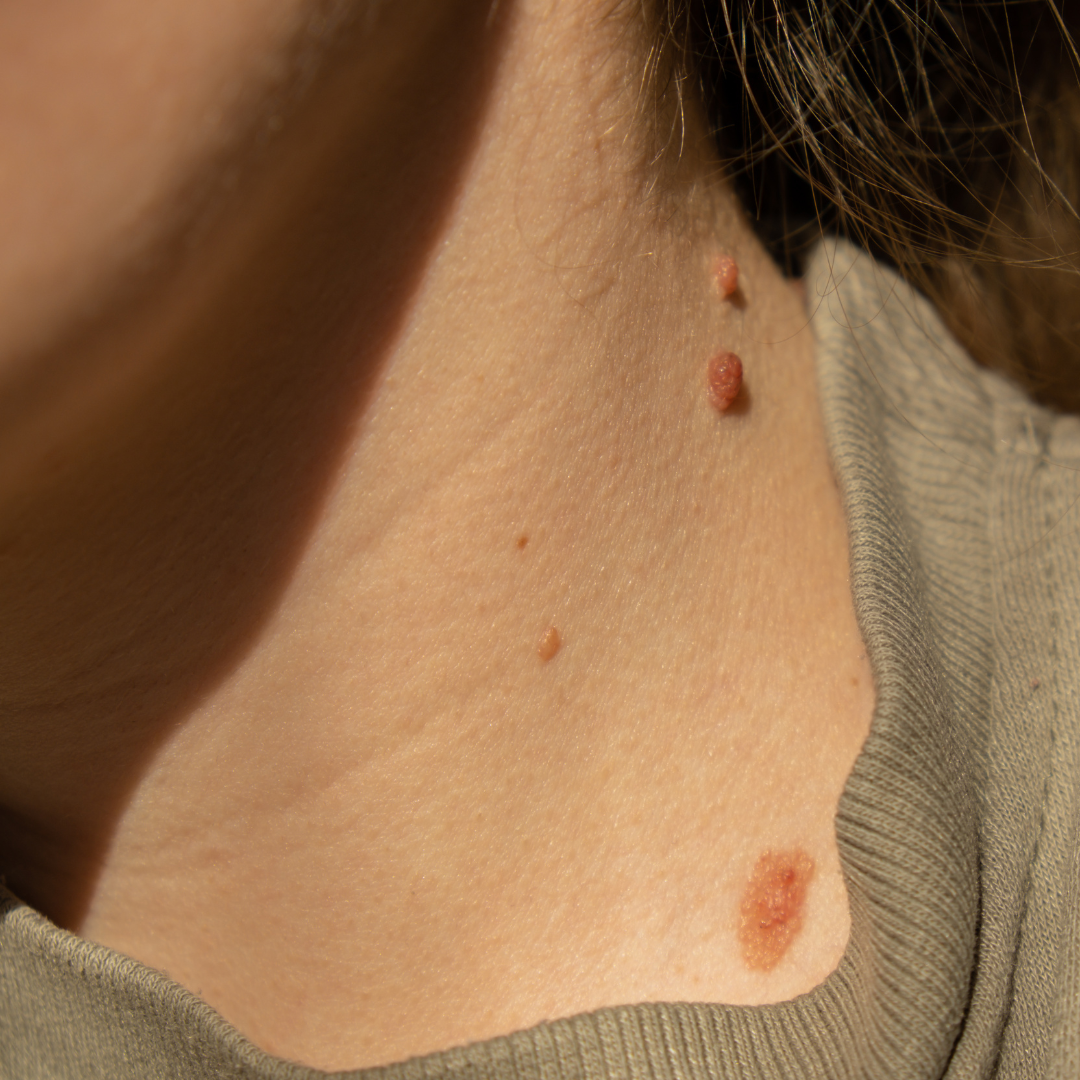 Skin Tags: Skin tags are flesh colored or light brown growths that usually appear anywhere that the skin rubs or folds together such as the neck, underarms, or groin. They are small, soft, and often attached to the skin by a thin stalk, which makes these growths easy to distinguish from other types of skin growths. Skin tags are very common and can develop in both men and women, becoming more common with age. Skin tags are considered to be benign and typically do not require medical treatment. Many people opt to get their skin tag removed due to cosmetic reasons or because they become irritated from friction with clothing, getting caught on jewelry, or shaving. Although skin tags are benign, it’s important to regularly monitor for any changes that look unusual or different from your typical skin tag. Certain factors such as genetics, weight, and skin friction may increase the likelihood of developing skin tags. Additionally, skin tags are also more commonly found in individuals with conditions such as hormonal changes or insulin resistance. While these growths are not harmful, understanding why they occur can better help you manage and monitor your skin. Safe removal options for skin tags are available and should always be performed by a trained healthcare provider to avoid complications.
Seborrheic Keratosis (SK): Seborrheic Keratosis also called SK, is a non-cancerous growth that appears as a waxy, wart-like growth that can range in color from tan, brown, or black. These growths often appear “stuck” on the skin and the appearance is slightly raised. They can develop anywhere on the body, but are most commonly found on the back, face, chest, or shoulders. These growths are especially common in adults over the age of 50, and tend to multiply in number with age. While the exact cause for seborrheic keratosis is not fully understood, genetics and natural aging are believed to play an important role. Seborrheic Keratosis are not contagious and are not related to skin cancer, which can help distinguish them from other skin conditions that are more serious. Although seborrheic keratosis are not harmful and don’t require medical treatment, many people choose to have them removed for cosmetic reasons or if they become irritated. They can sometimes also become itchy or inflamed if rubbed frequently. If your seborrheic keratosis is changing in appearance, starts to bleed, or becomes unusually dark, it’s important to have it examined by a medical professional. Seborrheic keratosis can sometimes resemble other skin growths, so a proper diagnosis ensures that appropriate care can take place.
Other Skin Lesions You Should Know About:
Cherry Angiomas: Cherry Angiomas are bright red or purple growths caused by a cluster of blood vessels. Common areas where you can find a cherry angioma include the arms, legs, and trunk. These growths are more common among those over 30 and typically multiply with age. Cherry angiomas are harmless, but if picked can bleed.
Warts: Warts are common skin growths caused by strains of the human papillomavirus, which infects the top layer of skin. Warts are typically found on the hands, fingers, and feet and can be contagious. Treatments often include topical medications, cryotherapy, or laser surgery to remove the lesion.
Congenital Nevi: Congenital Nevi are moles or birthmarks that are typically present at birth or appear shortly after. They can vary greatly in size, shape, and color. Larger congenital nevi can carry a higher risk of skin cancer, so consistent monitoring is important. These growths can appear anywhere on the body and be removed for cosmetic or medical reasons depending on the severity of the lesion.
Get Expert Removal for Moles, Skin Tags, and Seborrheic Keratosis in Sacramento
Although all of these growths appear on the skin, they have differing characteristics. Being able to distinguish the difference between these common skin growths can help you decide when to seek treatment or what options there are to remove the lesion. Moles, skin tags, and seborrheic keratosis each have their own unique features in terms of appearance, location, and texture, making careful examination of your skin lesion an important part of maintaining skin health. When in doubt, seeking a medical examination can provide clarity and peace of mind. Early assessment can help rule out both serious conditions and ensure you have access to safe and effective treatment! If you have any questions about a specific skin lesion, feel free to contact our office at Mole Removal Sacramento or take our quick Mole Quiz™. If you’re ready to safely remove a mole, skin tag, or seborrheic keratosis in Sacramento, call us today to schedule your consultation: (916) 545-7677